01
Care Objects
Objects that make support reachable without reducing the person to their vulnerability.
Support carried through objects and rituals.
What if the objects we carry, touch, place, or return to helped us move between states?
Transition Objects studies the objects, anchors, surfaces, and rituals people rely on to begin, switch, recover, prepare, remember, and return.
The work begins from a small but consequential observation.
A support object is never only functional.
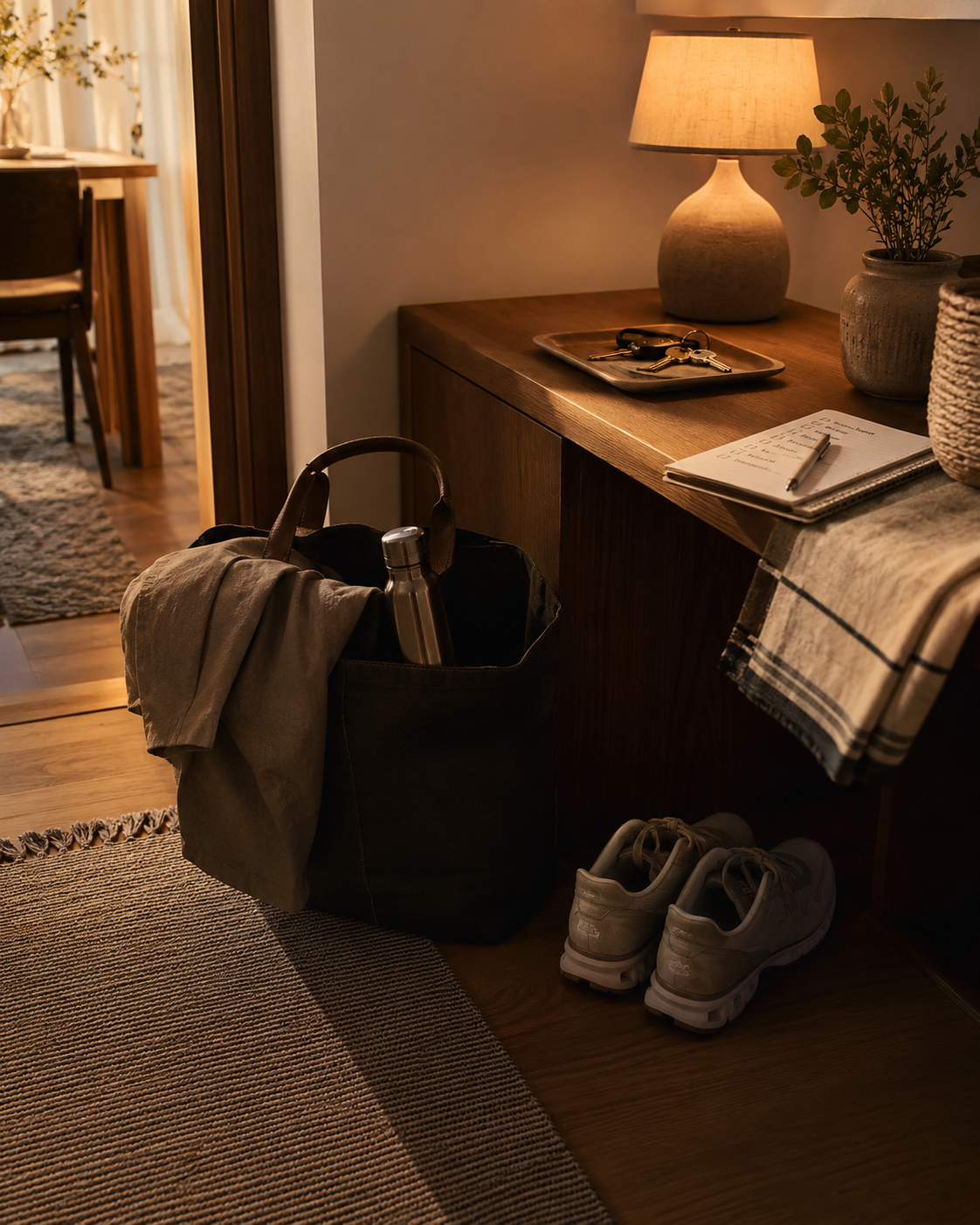
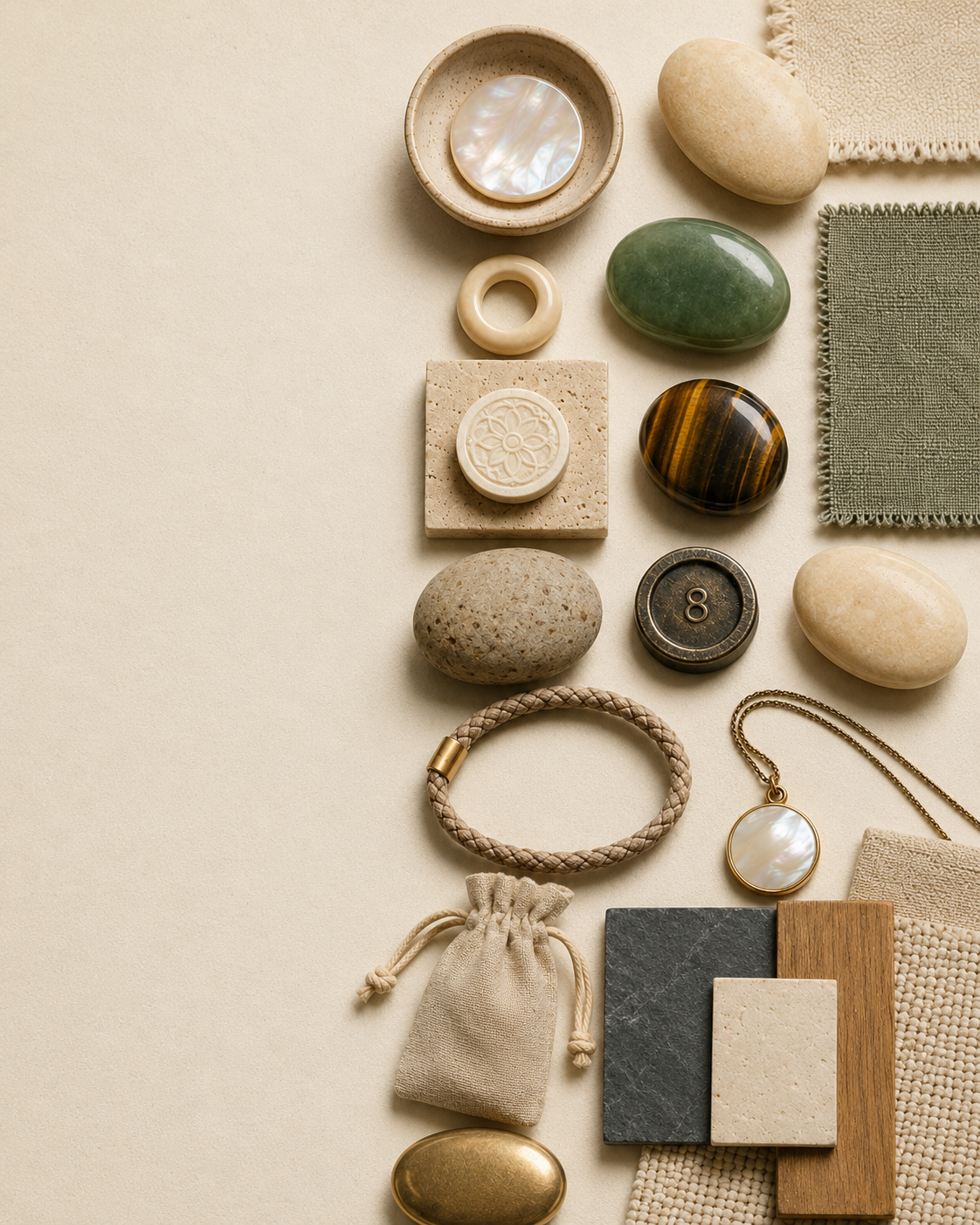
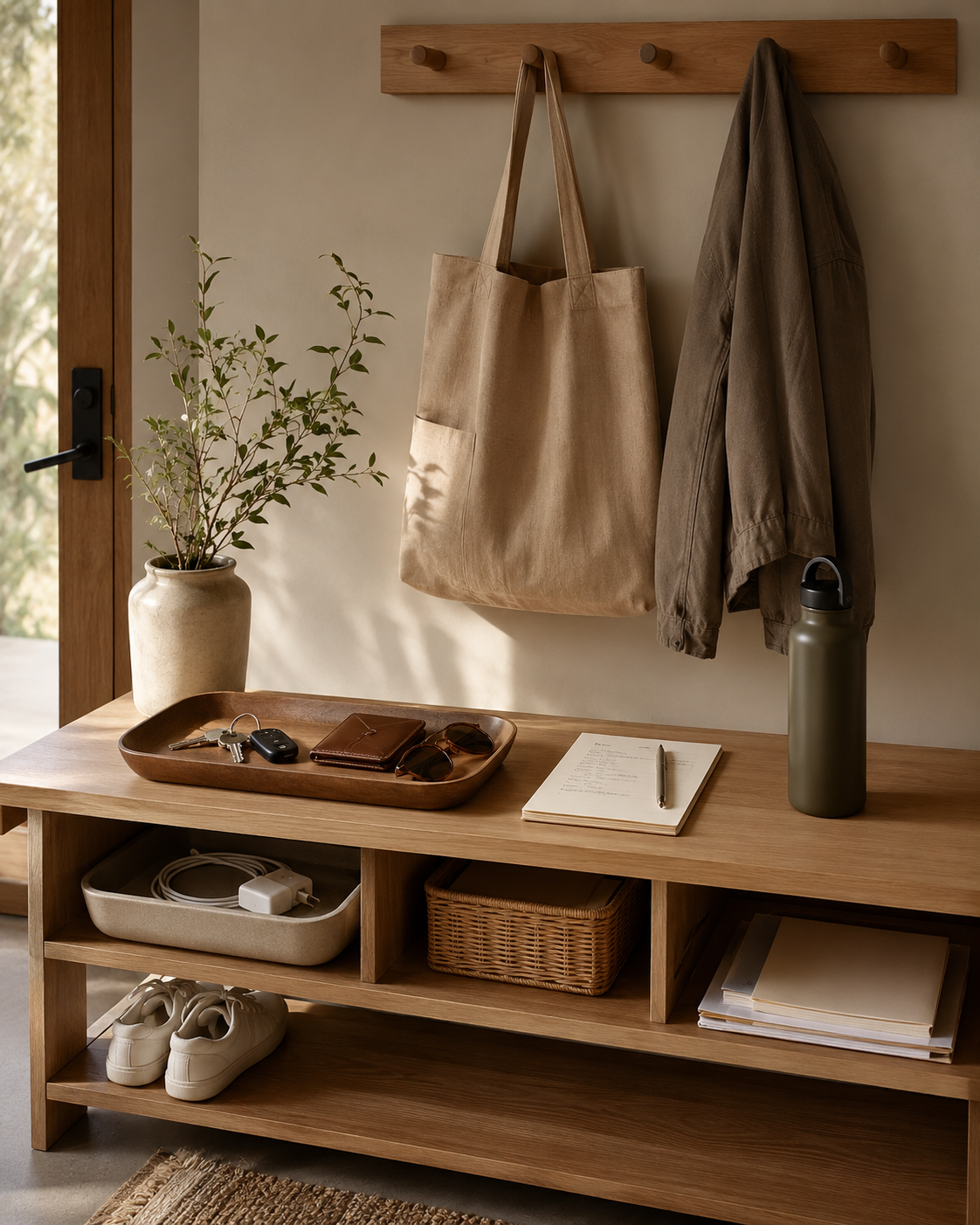
Object study — the surfaces and objects that hold a transition.
The medical alert pendant offered safety. It made help reachable. It gave family members reassurance.
But it also carried stigma, visibility, dependence, and a change in identity. The object did not only communicate function — it communicated a new social role.
How can support become available without making a person feel reduced, exposed, corrected, or marked by care?
People do not experience support objects as neutral tools. Objects mediate transitions between private and visible, independent and supported, scattered and prepared, activated and grounded.
The design challenge is not simply making support smaller, prettier, or more discreet. The challenge is preserving dignity while making support available.
The best support object does not announce what is wrong. It quietly helps the next state become possible.
Transition Objects investigates the things people carry, touch, place, prepare, or return to when capacity changes.
Objects that make support reachable without reducing the person to their vulnerability.
Stable locations and objects that reduce search behavior, remembering, and repeated decision-making.
Tactile, thermal, weighted, visual, or auditory objects that help the body return.
Objects used before entering, leaving, switching, calling, resting, caregiving, or beginning.
Small repeated actions that help a person prepare for the next state.
Body-adjacent objects that explore how sensing, support, identity, and dignity might coexist.
The question underneath all six:
What might care look like if the object preserved the person’s sense of self?
Each study begins with an object that appears ordinary, but carries more emotional and behavioral meaning than the system recognizes.
Transition Objects are guided by principles that protect dignity while making support available.
The object should not reduce the person to their condition, role, diagnosis, or vulnerability.
Support should fit into how a person already sees themselves, not demand a new identity.
The object should make support easier to access without requiring explanation, performance, or disclosure.
When possible, the object should hold place, sequence, meaning, or readiness so the person does not have to.
The object should create a gentle place to come back to: a surface, weight, gesture, cue, or ritual.
The object should not shame, score, nag, or communicate failure.
Some Transition Objects may become small-batch field prototypes, printable tools, or community-supported experiments. These are not products in the traditional sense.
They are ways to test whether an object, surface, or ritual can reduce friction, preserve dignity, or support a transition in everyday life.
Reflection prompts, object-anchor guides, one-step prompts, room setup worksheets, and pattern-mapping tools.
Open the toolkit →Trays, anchors, tactile objects, ritual surfaces, or wearable-adjacent form studies produced in limited runs.
Preorder or small pilot pathways for testing whether an object deserves further development.
Collaborations with caregivers, neurodivergent families, occupational therapists, clinicians, designers, and community groups.
These pathways are a way of asking the world a question, not a storefront — each one a test of whether an object deserves to exist at all.
Transition Objects is currently an observation and concept layer within Kutuhala Studio. The work draws from human-centered research, design ethnography, cognitive accessibility, occupational therapy, sensory design, assistive technology critique, product form studies, caregiving research, and embodied interaction.
Individual object studies vary in maturity. Some are field observations. Some are speculative concepts. Some may become printable tools or small-batch field prototypes.
Claims about improved regulation, task completion, safety, adherence, or sustained adoption remain hypotheses until tested.
Kutuhala uses object studies to ask better questions — not to overstate evidence before it exists.
Before any object can claim to help, these are the questions a future prototype would need to ask — honestly, and under real conditions.
The most important question is not whether an object looks supportive.
It is whether the person still feels like themselves while using it.
These objects do more than hold things. They hold transitions.
They help a person leave, return, begin, remember, prepare, pause, or ask for help.
Transition Objects asks how care might become less visible as failure — and more available as belonging.